
What Is the Real State of AI Integration for Businesses...
Read More
If organizations plan to hire dedicated developers in 2...
Read More
What should you know first? German law doesn't car...
Read More
Introduction
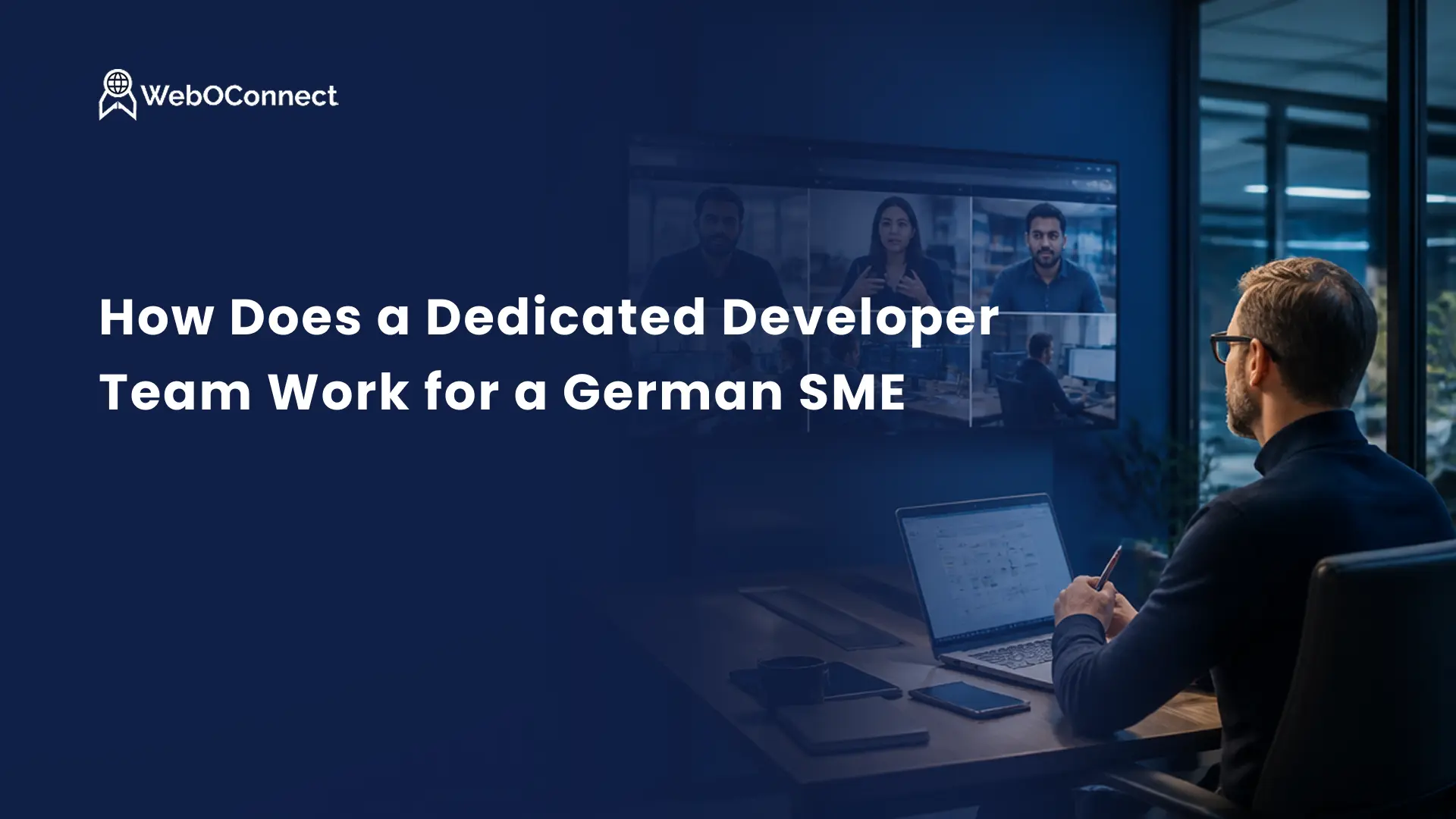
If you run a German SME, you already know that local hiring is slow and pricey. That's why a lot of engineering leads now work with a dedicated developer team based in India or Eastern Europe. It is not a project handoff. It is your people, just not in your office. You keep the backlog and the architecture decisions, they do the daily build and test.
How does the dedicated development model fit German SMEs?
The dedicated development model is simple. You rent a stable squad, not a fixed scope. The vendor handles contracts, payroll, laptops, and office. You handle priorities, code reviews, and product direction. This matters for IT outsourcing for SMEs because you rarely know the full scope three months out. You need to pivot without rewriting an SOW every time.
German companies like it because IP stays with them. Repos live in your GitHub, not theirs. Access is via your SSO. You run the same Definition of Done as your in-house team. No change requests, just monthly capacity. You can add a QA in March, drop a backend in June. That flexibility is why software outsourcing Germany has shifted from waterfall vendors to long-term squads.
What does planning look like with an offshore development team India setup?
Start with time zones, not kickoff decks. Germany is 3.5 to 4.5 hours behind India. Most teams block 10:00 to 13:00 CET for overlap. That is enough for standup, planning, and a quick demo.
Your lead writes clear tickets the evening before. The dedicated developer team picks them up after their lunch, pushes code, and leaves notes in Jira. You review next morning. It feels continuous if you keep tickets small and avoid vague specs.
Good vendors help you hire right. You define the stack, seniority, and English level. They shortlist three to five CVs. You interview, you choose. No bait and switch later. Also plan for Indian holidays. Diwali, Holi, and year end closures are real. Put them in your sprint calendar the same way you do German public holidays.
What are the core components you actually need?
Which framework keeps everyone aligned without bureaucracy?
Keep it light. Use RACI for decisions. Your CTO owns architecture. Their lead owns delivery. Devs own implementation. Finance just gets the monthly report.
Run two week sprints. Demo every second Friday on German time. Track only velocity and escaped bugs for the first quarter. Everything else is noise.
Share a one page monthly health check. People at risk, upcoming leave, infra costs, blockers. No 20 slide decks. Document architecture in short ADRs, record key whiteboard sessions with Loom. It saves weeks when someone new joins.
The trick is treating the group as your team, not a third-party ticket shop. When you give a dedicated developer team real context, access to customers, and permission to challenge specs, alignment happens without micromanagement.
What are best practices when you hire dedicated developers Germany SMEs actually follow?
Start small. Two devs and a QA. Ship something real in six weeks. Then scale. If you want to hire dedicated developers Germany teams will respect, interview them yourself and test with a paid trial task.
Treat them like employees. Invite them to all hands. Send company hoodies. Fly them to Stuttgart once a year, or fly over. A week together beats six months of Slack.
Own knowledge transfer. Require code reviews from both sides, rotate components, keep a runbook. Do quarterly access audits. Set clear work hours and on call rules in the contract so nobody burns out.
And remember why the dedicated development model works. You own product and quality, they own capacity and execution. IT outsourcing for SMEs fails when you chase the cheapest hourly rate. It works when a dedicated developer team gets the same goals, tools, and respect as your local crew.
Summary
A dedicated squad gives German SMEs engineering speed without local hiring pain. You keep control of road-map and IP while the partner handles HR and ops. Make overlap hours sacred, use your tools, lock down GDPR, and invest in communication. Start with a tiny team, prove delivery, then grow. Do that, and your offshore team stops feeling offshore. It just feels like your team.Calculate the exact hiring cost of dedicated resources using WebOConnect’s quote calculator.
Frequently Asked Questions
1. How much does it cost to run a team from India?
For mid to senior engineers, budget €2,800 to €4,500 per person per month. That includes salary, office, hardware, and vendor margin. You avoid recruiter fees and German employer costs. Add budget for licenses, travel once a year, and overlap meetings.
2. How do we stay GDPR compliant with Indian developers?
Sign a DPA and keep code and data in EU regions. Use SSO, VPN, and MDM on all devices. Never copy production customer data to dev machines. Most mature vendors are ISO 27001 certified and used to German audits.
3. What is the difference between dedicated and project outsourcing?
Project outsourcing is fixed scope and fixed price. Dedicated monthly capacity with the same people. You change priorities each sprint without change orders. Dedicated fits product work, project fits a well defined build.
4. How long until the team is productive?
Plan three to six weeks. Week one is access and setup. Weeks two and three are small bug fixes and pairing. By sprint three they should hit normal velocity. Good docs and a buddy on your side cut ramp time in half.
5. Can we scale up or down quickly?
Yes, with notice. Most contracts allow adding or removing a member with 30 days. Adding depends on availability, so share your roadmap a quarter ahead. Scaling down is easier than layoffs because the vendor reassigns the person.
6. Who owns the IP and code?
You do. The contract must state work for hire and full IP transfer. Keep repos in your organization, not the vendor's. Have each developer sign an NDA and IP assignment. Do not start coding before legal is signed.
7. What if performance drops?
Talk early. Set clear KPIs in sprint one. If one person is not a fit, ask for a replacement, usually free within two to four weeks. If the whole squad struggles, check your specs and feedback loop first. Good partners fix it fast to keep the account.
What Is the Real State of AI Integration for Businesses...
Read More
If organizations plan to hire dedicated developers in 2...
Read More
What should you know first? German law doesn't car...
Read MoreBusiness, technology, and innovation insights. Written by experts. Delivered weekly.

365FarmNet shuts down on 30 November 2026. If you're looking for a 365FarmNet alternative, the s...
Read More
What Is the Real State of AI Integration for Businesses Today? The noise around artificial intell...
Read More
If organizations plan to hire dedicated developers in 2026 they then enter a market shaped by senior...
Read More